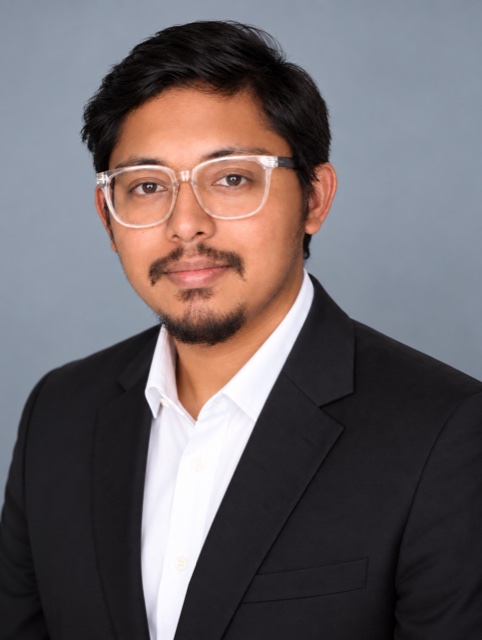
Sihat Afnan
Doctoral Researcher at University of California, IrvineHi! I am a PhD student in Computer Science at the University of California, Irvine, advised by Dr. Habiba Farrukh in the SPECT Lab. Before UCI, I received my B.Sc. in Computer Science and Engineering from Bangladesh University of Engineering and Technology (BUET) and taught at BRAC University as a Lecturer.
My research focuses on the security and privacy of embodied AI and other emerging systems, spanning robot learning and teleoperation, AR/VR, and autonomous driving, with an adversarial machine learning lens. I study how the sensors, motion data, and learned perception pipelines these systems depend on can be manipulated by adversaries or leak sensitive information about the people who operate and use them, and I build simulation and measurement frameworks that expose these risks before deployment.
- Security & privacy of embodied AI: what robot learning and teleoperation data reveals about the humans who recorded it
- AR/VR security: how a headset's own hardware can be turned against its spatial understanding
- Autonomous driving: how physical adversarial attacks play out when a human driver is back in the loop
- World model security: how adversaries can manipulate the learned world models that embodied agents rely on to predict, plan, and act
Outside research, you'll usually find me hiking the trails around Southern California or out on a long road trip with a good qawwali playlist. I'm also always hunting for the next great plate: a heaping kabuli pulao, a lamb shank that falls off the bone, a sizzling mutton karahi, or a slow-cooked nihari worth the drive. Recommendations are always welcome!
News
Show older news
Publications · Google Scholar
Motion retargeting, which maps a human operator's demonstrations onto a shared robot skeleton, is widely assumed to be a lossy, anonymizing projection. We show the map is effectively invertible: UNVEIL, a skeleton-aware spatiotemporal graph network, recovers operator gender, identity, and age/height from retargeted robot motion alone, generalizing to unseen operators, tasks, and retargeting implementations. Shared humanoid teleoperation datasets can therefore act as a biometric fingerprint of the people who recorded them.
A self-attention framework for detecting APT patterns in event sequences derived from system provenance graphs, reaching F1 scores of 98% and 95% on DARPA OpTC and DARPA TC E3, compared with 96% and 94% for LSTM baselines.
Education & Experience
Education
University of California, Irvine
Bangladesh University of Engineering and Technology (BUET)
Professional Experience
University of California, Irvine
Conducting research on security and privacy of perception modules in emerging systems, including AR/VR, autonomous vehicles, and embodied AI.
University of California, Irvine
Assisted in teaching CS 130 (Introduction to Computer Security), ICS 33 (Intermediate Programming with Python), and ICS H32 (Python Programming with Libraries - Accelerated).
BRAC University
Taught courses on Computer Architecture, Microprocessor, Operating Systems and Discrete Mathematics.
Spectrum Software & Consulting Ltd
Deployed mathematical models, built machine learning tools and devised financial engineering solutions.
Class Projects
Full-scale search engine over 55,000+ UCI ICS web documents with an inverted index, TF-IDF ranking, PageRank authority scoring, n-gram phrase matching, and SimHash near-duplicate detection. A two-pass retrieval pipeline pools candidates quickly, then re-ranks them using positional proximity and anchor-text signals, served through a Flask web UI and validated over 40 queries.
Extended the Agua framework to generate concept-based, human-understandable explanations for learning-enabled controllers across adaptive bitrate streaming, congestion control, and DDoS detection, using LLM-generated descriptions of system states and trained projection layers that map controller features to interpretable concepts.
Classifies network flows at an early stage from flow size, packet count, inter-arrival time, and duration, using decision trees that can be implemented directly in the PISA architecture.
Open-source implementation of Peak-Hopper: A New End-to-End Retransmission Timer for Reliable Unicast Transport, improving on the retransmission timer specified in RFC 2988, in the NS-3 network simulator.
Identifies and classifies named entities in Bangla text with a BERT model, for use in text analytics and information retrieval systems.
Added system calls, threading, and scheduling to xv6, implemented a Linux shell, and built xv6's memory management module.
An 8-bit processor with a pipelined datapath for a subset of the MIPS instruction set.
An embedded system built on an ATMega32 microcontroller with mounted sensors for obstacle detection and direction guidance.
Shoots rays from the observer's eye through the screen into a scene, finds the nearest object intersection, and shades the surface from its material and lighting conditions.
Coursework
Graduate Courses at UC Irvine
- CS 295 — Robotics Deep Learning. Neural-network methods for robot perception and control, including imitation and reinforcement learning, policy learning, and sim-to-real transfer.
- CS 205 — Computer and Systems Security. Attacks and defenses across OS, software, ML, mobile, sensors, and emerging IoT/CPS platforms, with a quarter-long research project.
- CS 203 — Network and Distributed Systems Security. Threats and defenses across networked and distributed systems, covering authentication, identification, secrecy, integrity, and access control.
- CS 273A — Machine Learning. Foundations of supervised learning — regression, decision trees, nearest neighbor, linear models, and naive Bayes — with Python implementation assignments.
- CS 256 — Systems and ML. Two-part course on systems built to accelerate ML training and inference, and on applying ML inside computer systems (scheduling, networking, OS).
- CS 216 — Image Understanding. Pulling semantic information from images and video: low-level processing, feature descriptors, segmentation, recognition, and tracking.
- CS 244 — Embedded and Ubiquitous Systems. Embedded processors, DSP, sensors and actuators, and wireless communication, with case studies in mobile, multimedia, and networking platforms.
- CS 204 — Usable Security and Privacy. Designing security and privacy mechanisms from a user-centered perspective, blending systems methods with human-factors research.
- CS 232 — Computer Networks. Internet, cellular, and cable network architectures with a focus on congestion control, addressing, routing, and quality of service.
- CS 221 — Information Retrieval. How search engines work end to end: web crawling, inverted indexing, query processing, ranking models such as TF-IDF and PageRank, and retrieval evaluation.
- INF 232 — Research in Human-Centered Computing. Foundational and current research in HCI and human-centered computing, with a focus on research methods for studying and designing technology around people.
Awards & Service
Awards
- Computer Science Department Research Fellowship (UCI) — Graduate Fellow
- Champion, international Grammatical Error Detection Competition (Kaggle)
- 2nd Runner Up, NLP Hackathon 2023, Bangladesh Open Source Network
- 1st Runner Up, HackNSU 2020, NSU ACM Student Chapter
- Top Seven, HackTheVerse 2020, IIT, University of Dhaka
- University Dean's List Scholarship (BUET), 2019-2023
- University Merit Scholarship (BUET), 2018-2023
- Talentpool Scholarship (HSC/O Level), 8th position in Dhaka Board
- Talentpool Scholarship (SSC/A Level), 20th position in Dhaka Board
Service
- Artifact Evaluation Committee, NDSS 2027
- Program Committee, BEA-ACL 2023 Workshop
- Coordinator and Problem Setter, ICT Olympiad of St. Joseph High School, Dhaka
Resources
Reading and lectures I keep coming back to.
Research & PhD Advice
- How to Look for Ideas in Computer Science Research by Dr. Zhiyun Qian
- How to Review Literature in Systems Security
- Threats to Validity and Relevance in Security Research
- Influential Security Papers
- Computer Security Conference Ranking and Statistic
- Advice for early-stage Ph.D. students by Prof. Philip Guo
- 10 easy ways to fail a Ph.D.
- Ph.D.s from the Faculty's Perspective
Lecture Series
- Advanced Topics in Security by Giovanni Vigna
- Program Analysis by Prof. Mayur Naik
- Program Analysis by Michael Pradel
- Distributed Computer Systems by S. Keshav, UWaterloo
- Simulation by S. Keshav, UWaterloo
- Stochastic Process by S. Keshav, UWaterloo
- Mathematical Foundations of Computer Networking by S. Keshav, UWaterloo
Contact
- Email: sihata@uci.edu
- Office: ICS Building 1, Room 430B, Donald Bren School of Information & Computer Sciences, University of California, Irvine, CA 92697